




A Study in “Creative Disobedience”
In the marvelous Marx Brothers movie, Horse Feathers, Groucho sings a song titled: Whatever It Is, I’m Against It. That satirical tune of rebellion and anarchy could have been the anthem and modus operandi for the unique, groundbreaking Chicano Art Movement that became known as ASCO.
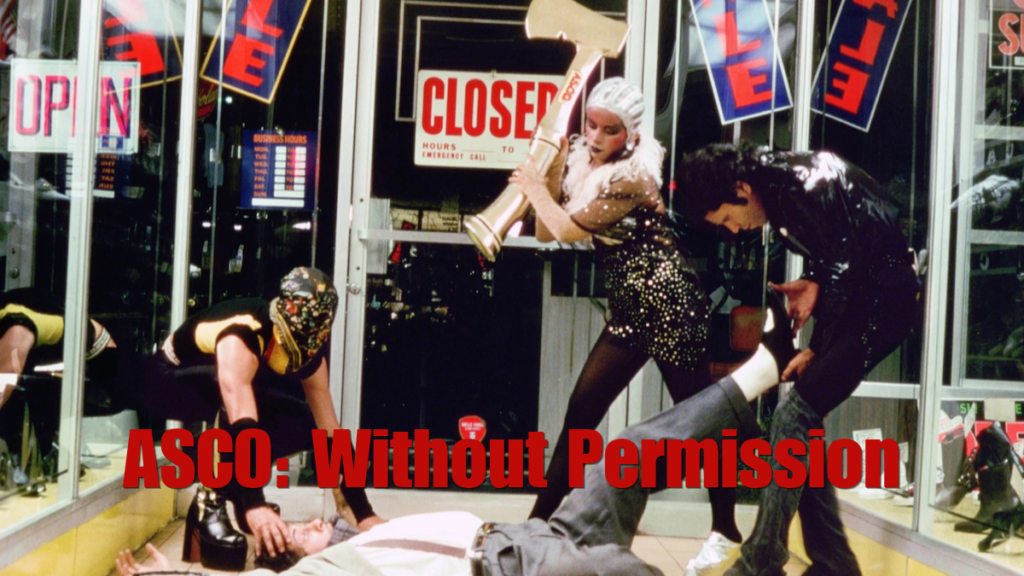
ASCO: Without Permission, a documentary by award-winning filmmaker, Travis Gutierrez Singer fashions together a fast-paced narrative blending interviews, photos, newsreel footage, and artwork in a style that embraces the non-linear, guerrilla, underground, anti-establishment sensibility that mirrors the ethos of the ASCO movement.
“My hope is the film is a manifesto, the ASCO manifesto, for the next generation of the Chicano and Latinx community”, says Singer, “as well as any marginalized group that wants to take from ASCO’s playbook”
That ASCO “playbook” had its genesis with Harry Gamboa Jr., Gulia “Gronk” Nicandro, Willie Herrón, and Patssi Valdez, when they met in high school and began making art as teenagers in 1970.
Singer deftly chronicles the creative arc of the founding radicals in “then” and “now” interviews in which they discuss the origins, struggles, triumphs, and enduring influential impact ASCO has had on Chicano art, and art in general.
ASCO (which is Spanish for “disgust) is an art movement that deserves more scholarly attention, and certainly merits more attention from Hollywood. There have been many Hollywood movies about famous European artists: The Agony and the Ecstasy (Michelangelo), and Lust for Life (Vincen Van Gogh), come to mind. Salma Hayek’s brilliant biopic of famed Mexican artist, Frida Kahlo (Frida), is noteworthy, but there still is no significant cinematic exploration of Chicano art that came to life in East LA back in the ‘70s, and ‘80’s and is still alive and kicking today.

By comparison, Andy Warhol’s Pop Art came and went in the glorious Sixties. Warhols’ underground films featured non-actors like socialite Edie Sedgwick, German singer, Nice, and counter-culture star, Viva.
Warhol’s Pop Art is best remembered for his iconic prints of Campbell Soup Cans, and multiple images of Marilyn Monroe.
It was, by and large, a New York City centered phenomena populated with East Coast elitist, but well-meaning amateurs.
ASCO, on the other hand, emerged from the urban barrios of East LA fueled by radical, working-class Latino kids with an artistic chip on their shoulders eager to break rules to create their own distinctive art in a search for a unique identity and recognition.
Singer’s documentary examines ASCO’s influence on today’s artists, creating modern-day “No Movies” that reimagine what is possible in cinema and art in the collaborative spirit of creative disobedience.
For his part, filmmaker Singer has created a “No Documentary” that is a definite “Yes, Must See.”
ASCO: Without Permission premiered on the PBS series VOCES on Friday, October 2, 2026, 10 p.m. ET (check local listings) on PBS, PBS.org and the PBS app.