


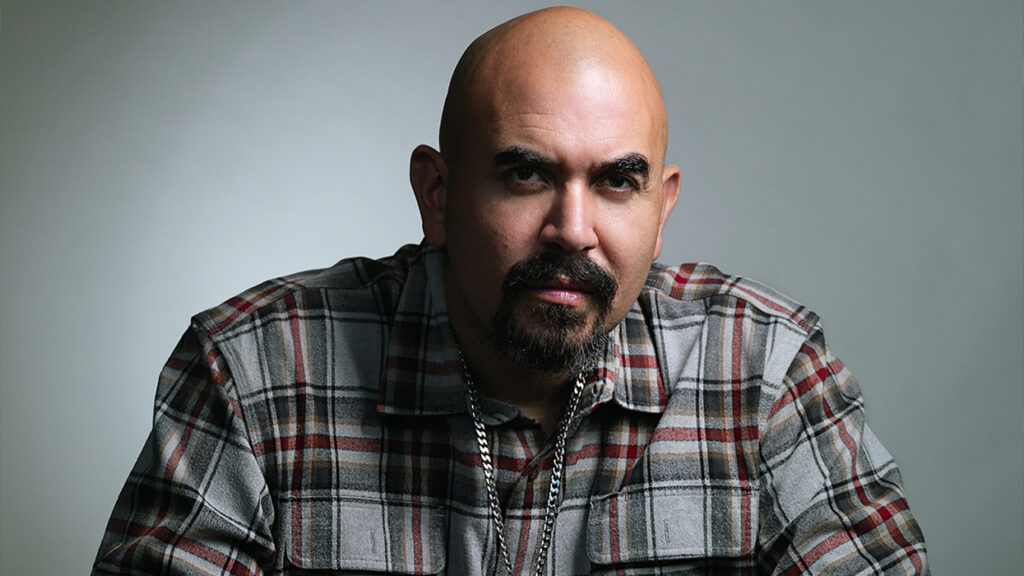
The Fast & Furious actor brings his famous recurring screen identity into a different position of power in the atmospheric prison mystery, while opening up about its haunted location, Latino representation and the hard lessons he has learned in Hollywood.
Hollywood’s “Hector” Returns
Noel Gugliemi has spent more than three decades becoming one of Hollywood’s most recognizable Latino character actors, often before audiences even knew his name. His face has appeared across studio blockbusters, crime dramas, comedies and television, frequently as a figure who enters a scene already carrying an implied history.
Online, Gugliemi is nearly as famous for repeatedly playing characters named Hector as he is for any individual film. Beginning most famously with the street-race organizer in 2001’s The Fast and the Furious, he has carried the name through numerous unrelated films and television series. Fans have even dubbed his loosely connected body of roles the “Hector Cinematic Universe.”
Gugliemi explained the pattern bluntly during an appearance on Drink Champs: “In Hollywood, they only know two names for Mexican actors, bro. It’s Hector and Carlos.”

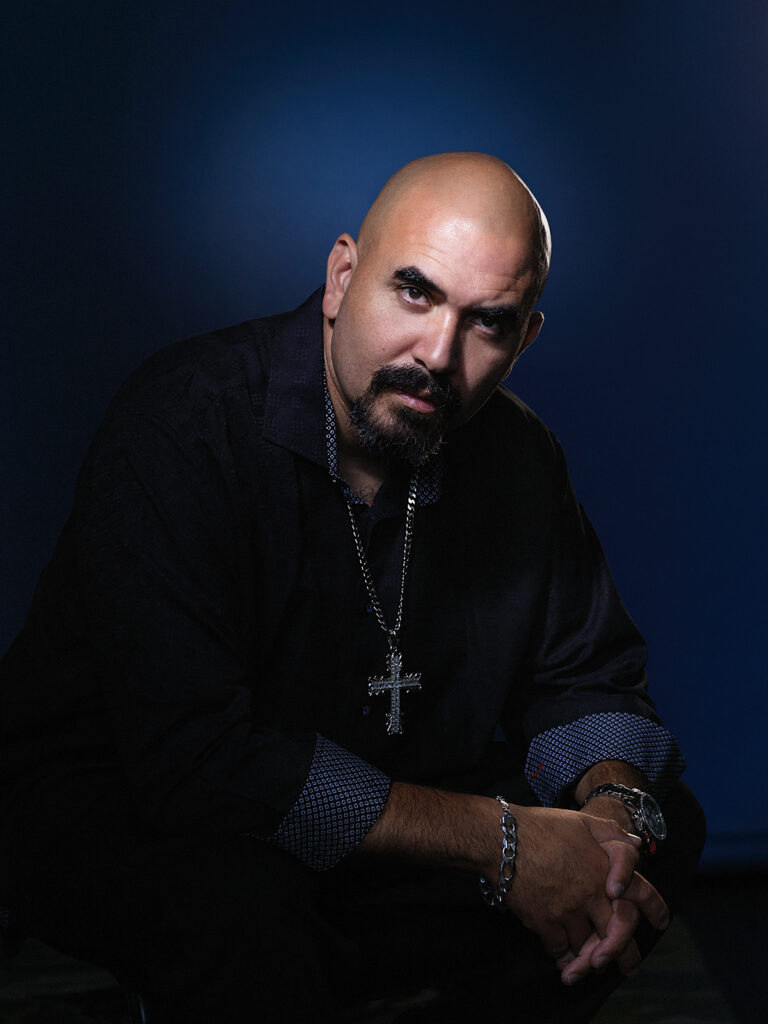
After receiving scripts filled with those two names throughout his career, Gugliemi eventually embraced Hector as his signature and began requesting the name himself whenever he had the influence to do so. What began as repeated Latino typecasting became an instantly recognizable personal brand with genuine pop-culture staying power.
After receiving scripts filled with those two names throughout his career, Gugliemi eventually embraced Hector as his signature and began requesting the name himself whenever he had the influence to do so. What began as repeated Latino typecasting became an instantly recognizable personal brand with genuine pop-culture staying power.
Time of Death adds Hector Ramos to that legacy, but with an important reversal. This time, Gugliemi is not being typecast as a prisoner or gang member. He is one of the guards controlling the prison and a key figure in the mystery surrounding a vanished inmate, which is central to the film’s story.
“This time I’m the guard, not the prisoner,” Gugliemi told Latin Heat. “So that worked for me.”
A Mystery Buried Inside a Decaying Prison
Directed by Will Wernick, Time of Death stars Jack Ryan franchise star and HBO Max The Penguin actor Michael Kelly as Detective Frank Morley, who is sent to a decaying prison on the verge of shutdown after a prisoner vanishes without a trace.
What begins with the familiar machinery of a police investigation steadily develops into a more disorienting psychological mystery as Morley’s search for facts destabilizes his grasp on what is real. The story combines the propulsion of a missing-person investigation with the atmosphere of Gothic prison horror. Screenwriter Jason Rosen deserves particular credit for the film’s intelligent, layered writing and for giving Gugliemi a substantial role woven directly into the central mystery.
Legendary Usual Suspects actor Kevin Pollak brings decades of dramatic and thriller experience to Warden Beau LaRue; Meanwhile, known for his work on iconic films like Heat, and more recently Send Help, Dennis Haysbert lends his unmistakable authority to Officer Aarons; and American Pie franchise actress Mena Suvari appears as Dr. Allison Burrell.
For Gugliemi, whose extensive filmography also includes Training Day, Bruce Almighty, S.W.A.T., Crank and The Dark Knight Rises, he easily becomes part of that formidable ensemble star cast of actors, placing one of cinema’s most recognizable street-level character actors alongside performers whose voices and faces carry their own immediate weight.
During an exclusive interview with Latin Heat, Gugliemi spoke about making Time of Death, the puzzle at the center of its story and the camaraderie behind its grim setting. The conversation then widened into an powerfully candid discussion of Latino representation, the difference between visibility and genuine support, and the personal code that has allowed him to survive Hollywood long enough to tell the difference.
Becoming Hector Ramos
For a film built around uncertainty, Gugliemi is an ideal piece of the ensemble. Audiences immediately recognize the toughness and authenticity he brings into the frame, but Hector’s exact position within the mystery is less easily read.
“I like doing different films that are different from things that I’ve done before,” Gugliemi said. “I like the thriller, suspense side of it all. And just me being a prison guard—this time I’m the guard, not the prisoner.”
“I love doing out-of-the-box stuff, so getting to be a part of this film was an awesome experience, especially with the cast that we had and the location we were filming at.”
Hector works closely with the prison’s senior authority figures, played by Pollak and Haysbert.
“My character was the right-hand man of the two main prison guards there—the warden, Kevin Pollak, and Dennis Haysbert,” Gugliemi explained. “I was kind of like the right-hand man of those two.”
“I love that stuff where I’m the go-to guy and the one that’s making a lot of this stuff happen, because I’m the guinea pig in the story.”
Despite Hector’s proximity to those in power, Gugliemi said his character does not have a complete understanding of what is unfolding around him.
“I kind of knew what was going on, but didn’t know what was going on,” he said. “At the same time, I don’t want to spoil it for anyone, but I was part of the reveal later. So it was cool.”
A Puzzle That Demands the Audience’s Attention
Gugliemi sees the film as one that requires active participation from its audience, rewarding viewers who pay attention to details that only become fully legible once its pieces converge.
“It’s kind of like a figure-it-out puzzle as you’re watching the film,” he said. “You’ve got to put your thinking cap on, because you don’t really know what’s up until the end.”

“It’s one of those movies where you really have to keep on your toes, because if you miss a certain part, it’s not going to make sense. It’s one of those puzzles you’ve got to put together.”
Its prison setting turns the investigation into a pressure chamber, tightening the mystery until its late revelations force earlier moments to be reconsidered.
“It definitely has you wondering: Who did this? Who got away with that? What’s going on in the prison? What’s happening here?” Gugliemi said. “You don’t get it until you watch the end—then you get it.”
Filming Where “It All Went Down”
Production took place inside the former West Virginia Penitentiary in Moundsville, a Gothic stone facility that operated for more than a century. The prison witnessed executions by hanging and electric chair before closing, and now operates as a museum and tourist attraction known in part for its reported paranormal activity.
“We were at a real joint where it all went down,” Gugliemi said. “It’s a museum now, so they can walk you through it and tell you, ‘This death happened here, and that happened there.’ We got to hear and see some of that stuff firsthand.”
That physical authenticity gives Time of Death a scale and texture that would be difficult to reproduce on a conventional stage. The heavy stone, aging cells and execution history are not decorative production design; they are part of the environment surrounding the performances. The film’s most unsettling asset was already standing before the cameras arrived.
“They actually say it was a haunted prison,” Gugliemi recalled. “We didn’t have any incidents on set, but just to walk around it, you could feel the presence and how creepy it was.”
The Complicated Legacy of Hollywood’s “Hector”
The ease with which audiences associate Gugliemi with a particular kind of role makes him an especially revealing figure through whom to consider Latino representation.
His performances brought specificity and authenticity to characters that might otherwise have been anonymous stereotypes. At the same time, the repetition exposes the limited imagination with which Latino men have often been cast: criminality becomes not merely one story they can inhabit, but the default language through which the industry recognizes them.

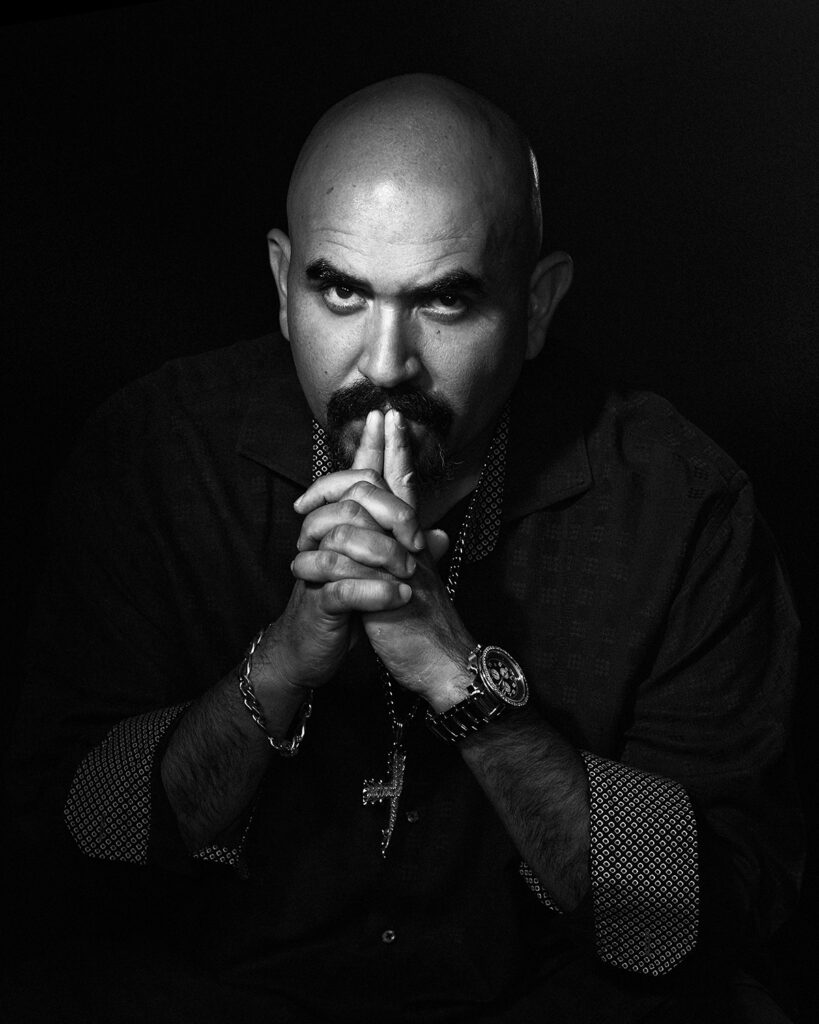
The “Hector Cinematic Universe” joke sits directly inside that contradiction. It celebrates Gugliemi’s extraordinary recognizability and endurance while also revealing how routinely Hollywood recycles the same names, visual codes and assumptions when constructing Latino men.
Gugliemi has been savvy enough to turn that limitation into a career-long signature. The industry’s lack of imagination remains visible underneath the meme.
His own path into acting was anything but conventional. Of Mexican and Italian descent, Gugliemi was abandoned by his parents and experienced homelessness as a teenager before acting redirected the course of his life.
What began unexpectedly grew into a career spanning well over 100 screen credits. His role as Hector in The Fast and the Furious became the decisive acceleration point, making both his face and that character name part of popular culture.
Social Media Has Opened New Doors
“Now with Latino acting, it’s a lot different because of social media,” Gugliemi said. “A lot of people are blooming more than they were in the past because now we have an open gateway to be seen, to be heard, to tell our stories and catch people’s attention.”
“I like that things like that are happening.”
Yet access to an audience does not automatically create access to sustainable opportunity. Nor does the increased public language around representation prove that those who use it have consistently opened doors for others.
Gugliemi draws a sharp distinction between visibility and solidarity, and between appearing supportive in public and taking meaningful action when no one is watching.
“Where Are All of Our Latino Films?”
Speaking candidly, Gugliemi said some of the most important support in his own career came from outside the Latino community.
“Back in the early days, not a lot of Latinos helped Latinos,” he said. “I would be lying to you if I told you different. I got farther in this business because of Black and white people than my own people.”
His criticism shifts part of the conversation away from an exclusively external demand that Hollywood do better. Gugliemi also asks what Latino professionals who have attained influence have done with it.
For him, the scarcity of Latino-led films is not an abstract statistic. It is evidence of opportunities that were not created, careers that were not developed and power that was not passed forward.
“Where’s my proof? Where are all of our Latino films?” he asked. “We don’t have a lot of Latino films out there.”
“Back in the early days, I could name about 50 white movie stars and 50 Black movie stars, but you could only name about 10 or fewer Latino stars.”
Calling Out Performative Advocacy
Gugliemi is particularly skeptical of public advocacy that, in his view, is not matched by a person’s conduct or history when the cameras are off.
“Now that social media has come out and we cannot be ignored, people want to jump on the bandwagon and say, ‘It was always about our people,’” Gugliemi said. “No, it wasn’t—because if it was, where are our Latino films from back then, when you had power?”
In an industry where the language of representation can itself become part of a public image, Gugliemi said he has learned not to accept the right message as automatic evidence of the right behavior.
“When I see people on a podcast, a radio interview or in a magazine, I don’t know if I can get behind you because I don’t know you personally enough to know if you’re really about what you’re saying,” he explained.
“I thank you for saying the right stuff, but I don’t know if you’re really about that off camera the way you talk about it on camera.”
Praising Real Ones & Latino Trailblazers
That distinction allows Gugliemi to identify the people he believes have handled success correctly. Among the Latino performers whom he considers authentic in both their accomplishments and their willingness to support others, he specifically named Emilio Rivera and Danny Trejo.
Both actors built careers from the kinds of roles Hollywood frequently assigns Latino men, yet expanded their presence far beyond any single archetype and remained, in Gugliemi’s estimation, accessible and real.
“My platform is not my platform,” Gugliemi said. “My platform is to give my platform to someone else, pass the baton, help people succeed and let them know that you can do what I’m doing.”
“This is for everyone.”
“Emilio Rivera is one of them. Danny Trejo—that’s another one,” he continued. “These are guys who are men of integrity and have done it correctly. They’re real ones in the game.”
Learning to Protect a Good Heart
Gugliemi’s advice to young Latino actors is grounded in his own experience helping performers through Suspect Entertainment, which worked to place Latino talent in film and television.
He initially gave that time freely, connecting people to rooms they could not have entered alone because he wanted to see others succeed. .
“It’s okay to have a good heart, but you’ve got to know how to protect your heart,” Gugliemi said. “You’ve got to know who you’re helping and why.”
“You might be helping the wrong person achieve some goals and putting someone in a spot who shouldn’t be in that spot.”
His decision to charge for that work was not a rejection of community. It was a boundary: if someone proved disloyal or simply quit, he would no longer be left carrying the full cost of the time he had invested.
“Do a heart check and a personality check first before you help anybody,” he said. “Be careful. Recognize who you’re dealing with, who you’re talking to, who you’re messing with and who you shouldn’t be messing with.”
Integrity as a Path Forward
Gugliemi’s larger lesson is not to stop helping or to treat every relationship with suspicion. It is to move with integrity, evaluate character before extending opportunity and expect the same standard from others.
“Watch out for slime, and don’t be slimy yourself,” he said. “You know how you move forward in any business? Just be a man of integrity. Do what you say. If you say something, do it.”
For Gugliemi, integrity is not merely a private virtue. It is also how lasting professional relationships are built.
“That’s why people want to do favors for you and advance you, because people go, ‘I can trust this guy. He’s a man of integrity. She’s a woman of integrity,’” he said. “People naturally want to do favors.”
“And be nice to everybody. I don’t care if you’re the one washing the windows on the building or you own the building.”
The Film That Changed Everything
The Fast and the Furious remains the film Gugliemi credits with changing the momentum of his career.
“After Fast and the Furious, my phone started ringing a lot more,” he said. “That’s what kicked off the roller-coaster ride.”
The role gave him reach and longevity, but his ambitions now extend beyond waiting for Hollywood to imagine him differently. He is developing projects of his own that deliberately move him outside the criminal and street-oriented roles that made him recognizable.
Creating Roles Hollywood Has Not Offered Him
“I’m writing a film right now,” Gugliemi revealed. “It’s kind of like Pretty Woman. It’s a love story and a fish-out-of-water story.”
“The way I explain it in three sentences or less is: a gangster who works at a five-star restaurant steals Hollywood’s biggest main squeeze.”
He is also developing a faith-centered documentary that would allow audiences to see a different side of him.
“I’m also working on a documentary called What Is a Christian? I’m the host of that,” Gugliemi said. “There are stories I’m writing that are breaking character and putting me in a different limelight.”
“Because I always say that if no one is going to give you the opportunity, give the opportunity to yourself.”
That impulse toward self-determination connects the two sides of Gugliemi’s conversation. His criticism of Latino representation is ultimately about who receives the power to create opportunity, while his career advice is about what a person does once that power arrives.
It is not enough to be visible. Someone must use that visibility to widen the frame for other Latinos.
Hector Holds the Keys in ‘Time of Death’
For now, Time of Death offers audiences a different view of Gugliemi within the kind of dark, high-stakes world he knows how to command.
The film does not attempt to erase the screen identity he spent decades building. It shifts his position within it—from the man seemingly limited by his environment and his role, now in control of it. Something that at this stage of his career, Gugliemi seems adamant to represent behind the camera as well in his real life.
Hector may be another familiar name in Gugliemi’s filmography, but this time he holds the keys.
That combination makes Time of Death a particularly fitting new chapter in his career. It delivers the “Hector” audiences immediately recognize, places him within a polished ensemble mystery led by Kelly, Pollak, Haysbert and Suvari, and surrounds them with a real location whose history intensifies the film’s psychological unease.
For viewers encountering him through the film, Hector Ramos is an entry point into a career—and a larger conversation about representation—that extends far beyond the prison walls of the film, and the walls of Hollywood.
Time of Death is now available to rent or purchase on major digital platforms.