



According to Nielsen’s 2025 Diverse Intelligence Series report, U.S. Hispanics represent more than $4.1 trillion in purchasing power, while streaming accounts for 55.8% of their total television viewing time, compared with 46% for the overall U.S. population.
The vertical-drama boom is not simply another media trend for Manny Ruiz (Minivela/Co-Founder/Brilla Media); it is the latest chapter in a career that has revolved around storytelling and the Latino audience.
“I’ve been a storyteller in one shape, or form since the late ‘80s,” Ruiz told me in a recent interview. His career began as a journalist and crime reporter for The Miami Herald, followed by years in Hispanic public relations and media. He later founded Hispanic PR Wire and went on to build Hispanicize, a platform that became an important part of the U.S. Latino influencer and social-media industry. Today, he sees Minivela as the next evolution of that work.
Ruiz describes Minivela as the first bilingual vertical-shorts platform built specifically for the U.S. Hispanic and Latin American markets. The company was launched in 2025 by Brilla Media, the Latino media company Ruiz co-founded with his wife, Angela Sustaita-Ruiz, in partnership with actor and producer Carlos Ponce and adtech company Numatec.
The choice of partners is telling. Ponce brings decades of experience in television, film and, particularly, the world of Latin entertainment, while Ruiz brings a career spent building connections between Latino audiences, media and brands. Together, they are approaching the vertical format not simply as a new way to watch content, but as an opportunity to create a new space for Latino stories and creators. “Our approach is different,” Ruiz told me. “We are really [about] community and for the Hispanic market and even broadly Latin America.”
His goal, he explained, is to go “upward”: to retain the structures of the stories people want to watch without following what he sees as the industry’s increasing move toward more adult-oriented material.
For Ruiz, that also means creating an industry in which Latino writers, directors, producers, and actors have more opportunities to participate. When Minivela launched, the company described its mission as opening additional production opportunities for Latino creative talent, from directors and writers to actors and influencers.
That mission is already beginning to extend beyond Minivela’s own productions. In 2026, Great American Media’s Pure Flix partnered with Minivela on a multi-project agreement to develop and distribute a slate of microdramas for U.S. Hispanic and Latin American audiences, including original stories and adaptations from Pure Flix’s existing library. The projects are being developed for vertical viewing and for bilingual, Spanish-language and culturally specific audiences.
“Great American Pure Flix is the leading faith-and-family streaming service, and Pure Flix Familia will build on that foundation with programming and experiences created specifically for Latino families,” said Bill Abbott, President and CEO of Great American Media.


During Hispanic Heritage Month this past October 2026, Great American Media announced the expansion of their investment into Latino entertainment by launching Pure Flix Famila, a new streaming destination created for families seeking culturally relevant entertainment rooted in faith, family and shared values.
Pure Flix Familia launched with the distribution of an original microdrama Alquilé Un Novio Para Navidad and a national call for Latino-produced family and faith films. The plan is to start with Spanish-language entertainment with the goal of expanding to include English-language, and bilingual storytelling created and curated for Latino audiences.
However, perhaps the clearest example of what Minivela is doing in the Latino vertical-drama content creation space is Rico’s Tacos.

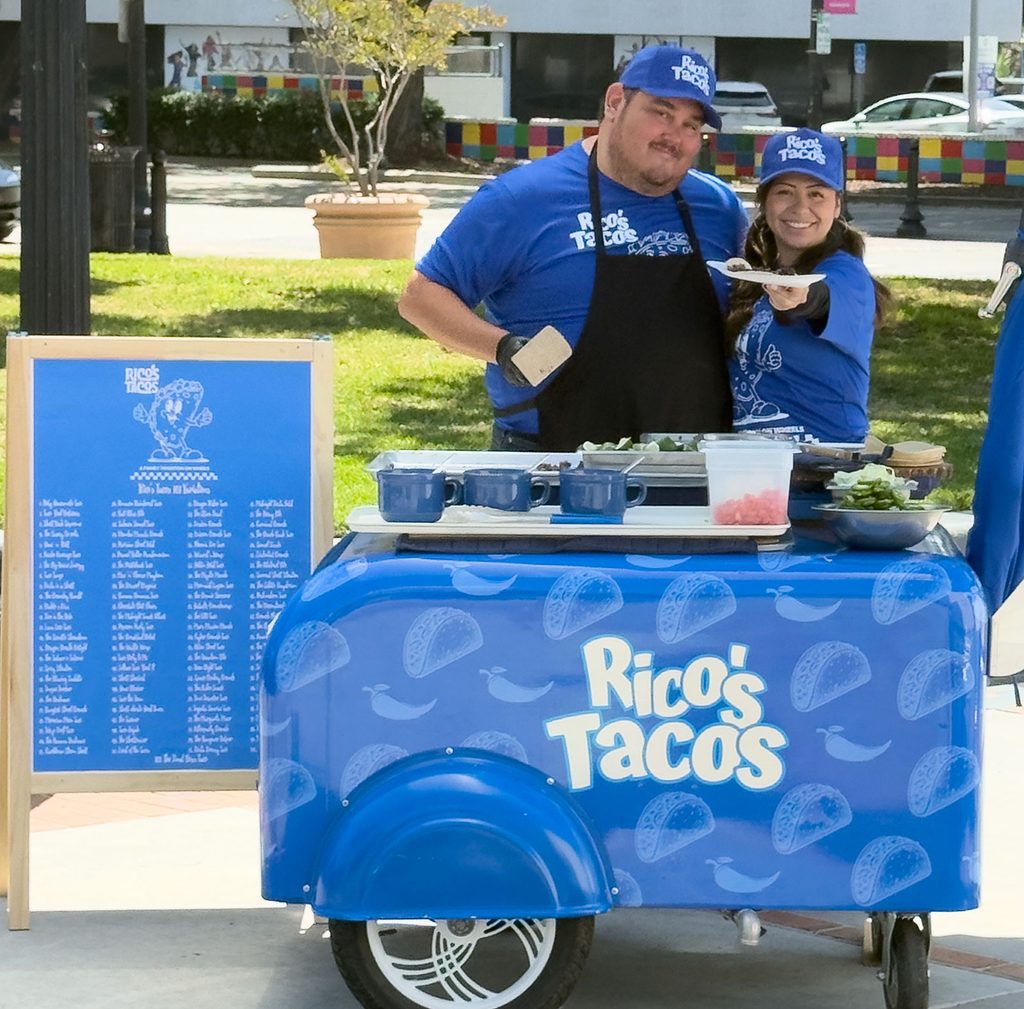
Rico’s Tacos: From Telenovela to the Supermarket Aisle
Rico’s Tacos is a 22-episode vertical microdrama set in a Southern California neighborhood near Venice Beach. Produced by Minivela, the story follows a widowed father, his teenage daughter, and their abuela as they build a family taco business while navigating identity, resilience and family legacy. Each episode is less than three minutes, making the series deliberately suited for mobile viewing (Digiday, 2026).
Rico’s Tacos is also an experiment in something much bigger: What happens when a brand stops simply advertising around entertainment and starts helping create the entertainment itself. The project was developed through a collaboration between Procter & Gamble and Albertsons Media Collective, with shopper and cultural insights from Albertsons and P&G informing the story from the beginning. Rather than adding an advertisement to a finished production, the partners used information about how consumers shop to help shape the narrative (Albertsons Media Collective, 2026).
In one episode, for example, the family’s abuela goes to Albertsons to buy avocados and realizes that she also needs Head & Shoulders shampoo. It is a small moment, but it illustrates the premise—an ordinary shopping trip becomes part of the story rather than an interruption to it (The Wall Street Journal, 2026).
The series is distributed across Albertsons’ YouTube, social and in-store platforms, with short teasers and QR codes directing shoppers to the full episodes. The retailer has also been using its stores as part of the production and distribution environment (Albertsons Media Collective, 2026).
Albertsons executives have even referred internally to the concept as “soap opera 2.0”—a contemporary version of serialized entertainment that can live on social media, mobile devices and, in this case, inside the supermarket itself (Digiday, 2026).

For Minivela, however, Rico’s Tacos represents more than an innovative advertising experiment. It is a demonstration of what Latino storytelling can look like when the audience is considered from the beginning; not as a niche to be targeted later, but as the community for whom the story is being created.
When I spoke with Ruiz in Los Angeles this past summer, during the run of the Chicano Hollywood Film Festival, he was already looking beyond Rico’s Tacos. He was in L.A. not only to celebrate the project but also to continue building Minivela’s relationship with Pure Flix Familia and to meet with filmmakers and other creators. And perhaps that is the most promising part of this new format. Vertical drama is still young enough that its future has not been decided. The technology may have created the format, and the algorithms may have accelerated it, but there is still room for creators to decide what stories belong inside that little rectangle we carry everywhere.
For Latino storytellers, that could mean something bigger than simply finding a new place to watch a telenovela. It could mean helping shape what the next generation of television and marketing looks like and making sure our stories are there from the beginning.
A Billion-Dollar Industry
While artificial intelligence is increasingly being used to create some of this content, much of the vertical-drama industry still relies on real actors, writers, directors, and production teams. The content is hosted on independent streaming platforms and apps that are growing at an astonishing pace.
There are now hundreds of dedicated short and vertical-drama apps worldwide, with platforms such as ReelShort, DramaBox, and GoodShort among the most recognizable names in the international market.
Sensor Tower estimates that short-drama apps generated approximately $700 million in global in-app revenue in the first quarter of 2025 alone, nearly four times the revenue generated in the same quarter a year earlier. The apps also surpassed 370 million downloads globally during those three months. By March 2025, cumulative global in-app revenue had reached approximately $2.3 billion (Sensor Tower, 2025). And the audience is no longer small enough to dismiss as a social-media curiosity.
According to Omdia, approximately 66 million people in the United States were monthly microdrama viewers in 2025, up dramatically from 26 million the previous year (Reuters, 2026). The numbers suggest that vertical drama is becoming less of a social-media phenomenon and more of a new form of television.
And this may only be the beginning.