By Judi Jordan for Latin Heat
Vinícius Costa da Silva never planned to become opera’s favorite dark presence. Offstage, he’s warm, joyful, quick to laugh. Onstage, the 6’3″, curly-bearded Brazilian commands priests, rogues, and powerful men with effortless authority. That contrast — sunlight personality, shadow roles — is part of the intrigue. And so, Brazil’s 2026 winning streak continues with a São Paulo native commanding the stage at LA Opera’s epic production of Akhnaten direccted by Philip Glass.
Costa’s journey from São Paulo’s working-class East Zone to LA Opera feels like destiny with a strong assist from grit. The path wasn’t linear. It rarely is.
Like many musicians, it began with curiosity. Costa was first drawn to the “funny-looking” French horn, fascinated by its shape. The real turning point happened somewhere far less glamorous — a school restroom. A classmate overheard him singing and told the choir master, “He can sing!” Costa was suddenly doing solos.
“Back then, I was just a curious kid trying different things. But after I sang for the choir master, that’s when I found my true voice.” Support followed — slowly, then fully.
“I had a very good family: my mom Marina Costa, brother Pedro were big supporters and my father Zorandir Ramos — after a while when he realized that I could make some beautiful sound, he got courage enough to come and listen to me then he started supporting me also.”
From choir boy to opera stages, Costa’s trajectory reads like a sequence of doors opening — each earned. Mentors guided him from Brazil to Basel, where he completed bachelor, master’s and post-master’s degrees, before arriving at LA Opera’s Domingo-Colburn-Stein Young Artist Program. Akhnaten marks his fifth LA Opera role — with more ahead.
Two early figures remain foundational: Maria Lúcia Waldow and retired baritone-turned-teacher Francisco Campos.
“I treat them like Sensei,” Costa says, recalling lessons after school and how Campos would feed him when he arrived hungry. Waldow’s message was constant: discipline, standards, no shortcuts. “She was always telling me you don’t sacrifice quality!” And: “You have to practice — a lot!”
Costa smiles. “They not only taught me to sing but taught me what it means to be a professional.”
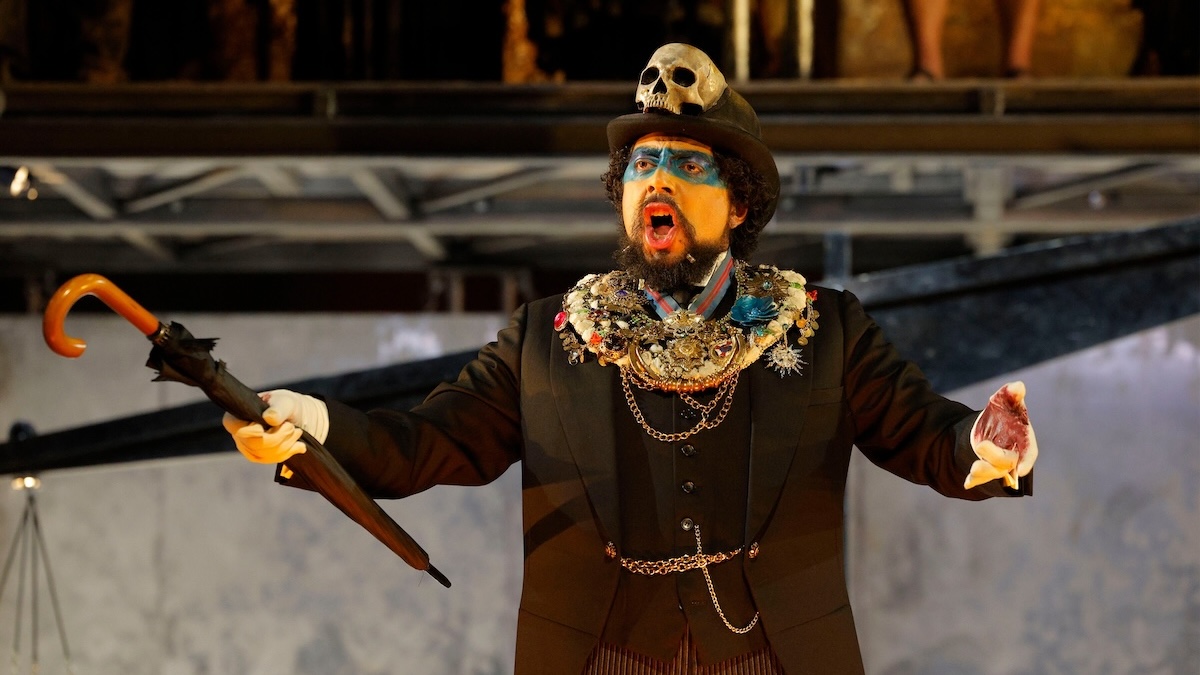
That seriousness toward craft defines him. Costa doesn’t approach roles technically — he approaches them anthropologically. Languages, history, psychology — all part of the preparation. German, French, Italian, Spanish, English — and the cultural codes behind them.
“Opera isn’t just about hitting the right notes — it’s about understanding the meaning behind the words,” Costa said. “When I sing in a new language, I dive deep into its culture. I watch films, listen to native speakers, to immerse myself as much as possible. I want to give the character the depth it deserves.” It shows.
Whether as Aye in Akhnaten — father of Nefertiti and advisor to the Pharaoh — the Duke in Roméo et Juliette, or the Speaker in The Magic Flute, Costa specializes in dimensional authority. Villains with interior life. Power with psychology.
“The bass is often the villain, but I don’t play him as just evil. I try to find what makes him tick, what makes him real.”
Offstage, the intensity softens. Costa remains disarmingly grounded — curious, hardworking, visibly grateful. The Young Artist Program at LA Opera plays a major role in that evolution.
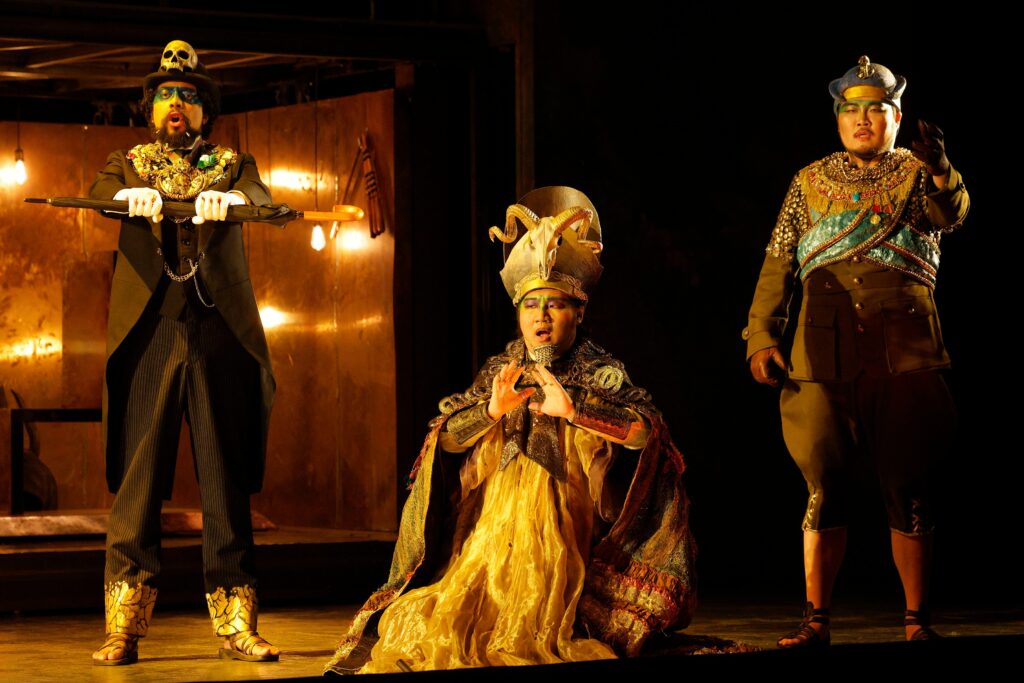
“LA Opera has been an amazing place to grow,” he says. “Everyone here does their job at such a high level, and we’re treated with so much respect. It’s a place where artists are encouraged to be their best, but they also feel supported. It’s been the perfect environment to learn and improve.”
And yet, the perspective remains intact.
“I never expected to be here,” Costa says. “I grew up in a place where classical music was rare. But thanks to opportunities like the Guri Santa Marcelina program, which brought music into communities that lacked access, I was able to find my path. Music was never ‘supposed’ to be a part of my life, but now it’s everything.”
Representation matters — and Costa understands the symbolism.
“I’m incredibly proud to represent my country. Brazilian culture is rich, vibrant, and full of heart, and I feel like the world is finally recognizing it.”
The next chapter is already unfolding. This season includes Falstaff, one of his favorites. “It’s just so joyful, so playful, and it has some of the most beautiful music. I’ve always wanted to be a part of it, and now I get to live that dream.”
Looking ahead, Costa is drawn to roles with philosophical weight — darker edges, psychological complexity, the devilish spectrum opera does so well. Which brings us back to the title: Sweet Villainy.
For Vinícius Costa da Silva, the tension between warmth and shadow isn’t a contradiction. It’s the instrument. And LA Opera audiences are just beginning to hear its full range.
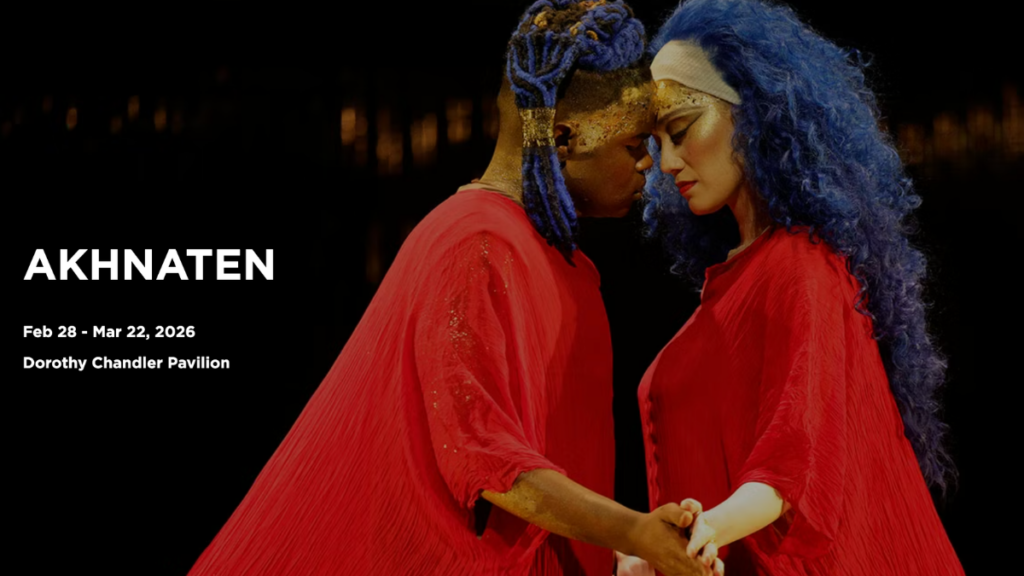
Akhnaten returns after 10 years to the Dorothy Chandler Pavilion, with performances running from February 28 to March 22, 2026. This revival features countertenor John Holiday in the title role and is conducted by Dalia Stasevska in her company debut
About the Author